


























Learn how to tie the Big Junk Streamer, including step-by-step instructions, a video tutorial, pictures, and much more. Improve your fly-tying skills here.
Did you find this video helpful? We've got hundreds more just like it. Subscribe to Trident's YouTube Channel and enhance your fly-tying skills. New videos are posted frequently in a variety of different patterns.
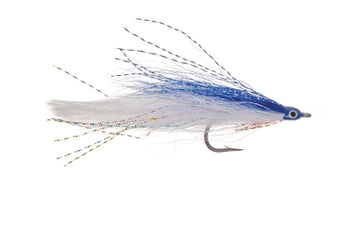
The Big Junk Streamer fly is an excellent pattern from Lance Egan designed to deceive aggressive, territorial fish like bass, trout, and northern pike. Utilizing materials such as marabou, laser dub, and lead eyes, this pattern sinks to the strike zone quickly and offers lively movement. If you love watching hostile fish chase down streamers, consider tying some Big Junk Streamers for your arsenal.
We've put together a kit that contains all the materials you need to tie this exact fly pattern.
Click the button below to shop the selection.
Material list:
- Hook: Tiemco TMC 5263 Nymph & Streamer Hooks (size: 8)
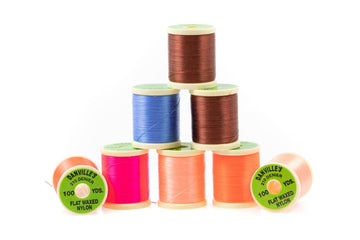
- Thread: UTC Ultra Thread 70 Denier (color: olive)
- Eyes: Hareline Double Pupil Lead Eyes (size: large, color: red/white/black)
- Tail: Hareline Extra Select Marabou Feathers (color: olive, tan)
- Lateral Scale: Hedron Lateral Scale (size: 1/16, color: opal mirage)
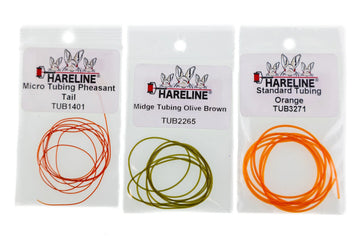
- Body: Hareline Chenille (size: fine, color: olive)
- Adhesive: Pacer Zap Fly Fishing Brush-On
- Hackle: Wapsi Indian Rooster Saddle Patch (color: olive)
- Head: Senyo's Laser Dub (color: sculpin olive)
Video Transcript
Hello, I'm Carl at Trident Fly Fishing, and today we're going to tie the Big Junk Streamer. This is a streamer from Lance Egan. It's very similar to the Woolly Bugger. It has a nice weight to get it down through the water column quickly, and it swims hook point up, reducing the chances of hanging it up on the bottom. It will swim like so, and there's the fly in the vise.
The hook we're going to use today is a TMC 5263, size 8 - that's a 3X long, 2X heavy streamer hook. We've got some 70 denier UTC in the color olive, and we'll start our thread about 2 eye lengths behind the hook eye, where we're going to tie in our lead eyes. I like to form a small ball there to keep it from going forward. These are Hareline double pupil, red, white, and black eyes in lead. That little ball seems to keep the eyes from sliding around, so we're just going to make a lot of figure 8s, and then around the bottom like so to tighten all of that down. That's pretty good - anchored. Now we'll take a little bit of Zap-A-Gap, just a dab on either side, to further reinforce this for us.
Once we've got the eyes secured, we're going to wrap back to the start of the bend of the hook, where we're going to tie in our tail material. The next material is going to be some marabou. We're going to use two different colors. This is Hareline strung blood quill marabou in olive, and we're also going to use the same thing in a color ginger. This fly swims upside down, so the first color we're going to tie in is going to be the olive, because when it swims, we want the lighter color to be on the bottom. We'll strip some material from the quill. We want this to be about twice the length of the hook. Tie that in on top. And next, some ginger-colored - it's going to be the same length.
There is some flash with this fly. This is just some lateral scale. We're going to take two pieces of that and tie them in on either side of the marabou. Roll it over the top, tie it down the other side. We're going to trim those pieces off the same length as the marabou.
This fly has a rib. This is just some 6X tippet material, and this is going to be used to capture our hackle. We're going to tie this in on the near side of the hook, right back to the tail. Get that in our material holder and out of the way.
The body of the fly is just Hareline chenille in fine olive, or size small. We'll prepare that by pulling some of the material away from the core to give us a tie-in point, and we'll cut down on the bulk - strip some material away from the core so we don't get a big lump back here when we tie it in. Run our thread up to the eye, and we'll get a whip finish tool and tie that off to save our work. We'll use the rotary function of the vise to wrap that chenille. Make sure you grab a hold of your tail material when you make that first wrap so that you don't draw it all the way around the hook. Run that up to the eye and cut off our excess.
The hackle for this fly is a Whiting saddle - a rooster saddle - and the color is badger olive. Grizzly olive would work really well here too. I've got a couple of feathers picked out. We'll prepare that by removing some material from the bottom, leaving some small pieces to be caught by the thread so it won't pull out. Now in open spiral turns, we're going to wrap this back all the way to the base of the tail, and we're going to capture it with that piece of tippet. Wrap that tippet through the hackle - don't worry about capturing any of the material, it'll find its way through it. Cut off our excess.
For the head of the fly, we're going to make a dubbing loop and use some Senyo's Laser Dub in the color olive. Take out our Stonfo tool here and get about five or six inches of a loop, and run our thread up to the eye of the hook. I've prepared some material here - get that up inside the two pieces of thread, capture it, and spin it up. Take our Velcro from our Stonfo tool and pick that out. Now we're going to take a few turns with that material behind the eyes, and some crossing wraps over the eyes. Capture it and cut off our excess. We'll pick all that out in just a minute and form a small head. Whip finish tool. Cut our thread. Pick that material out, give it a bit of a trim, and we need to cut off our piece of hackle here.
Some head cement - this is Loon's water-based. Clean out the eye, and our fly is finished. Please feel free to add comments at the bottom of the page, and don't forget to hit that subscribe button to view all the new content here at Trident Fly Fishing. Thanks for watching, and I hope to see you again next time.
Comments
(0)No comments yet. Be the first!