

Rod and reel purchase
"Very slow shipping. 3 days before shipping and a week and half before I got them. Ordered another rod and reel from another company and got it on two days."
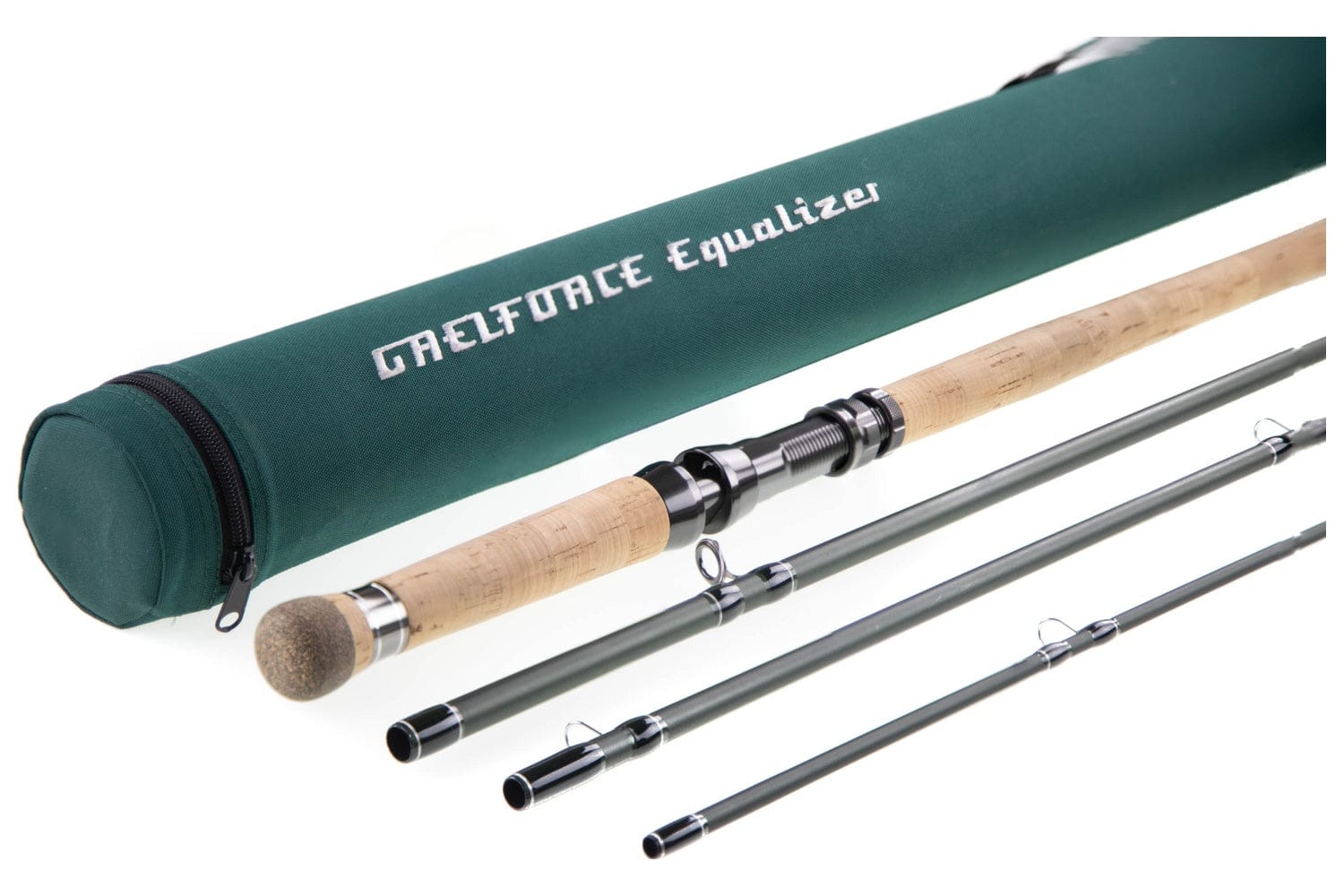
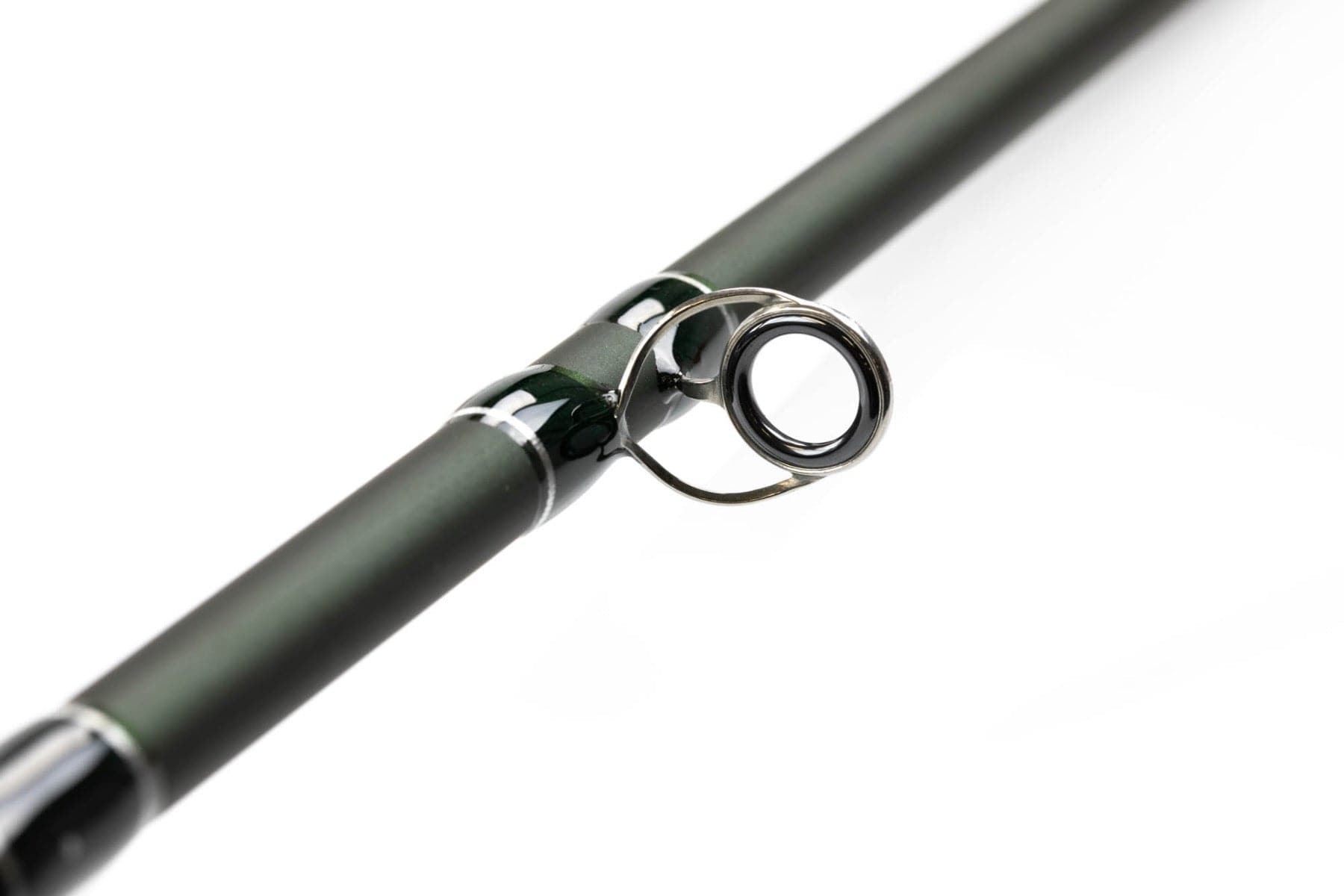
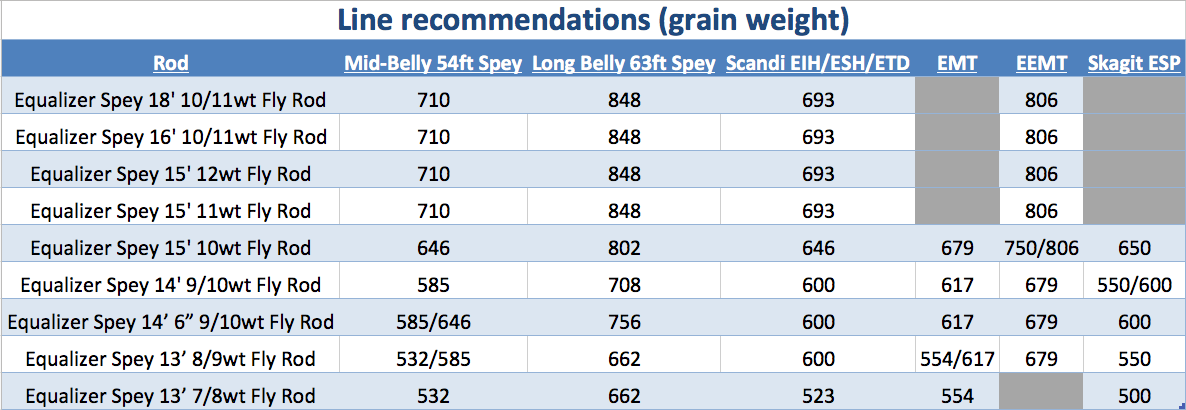
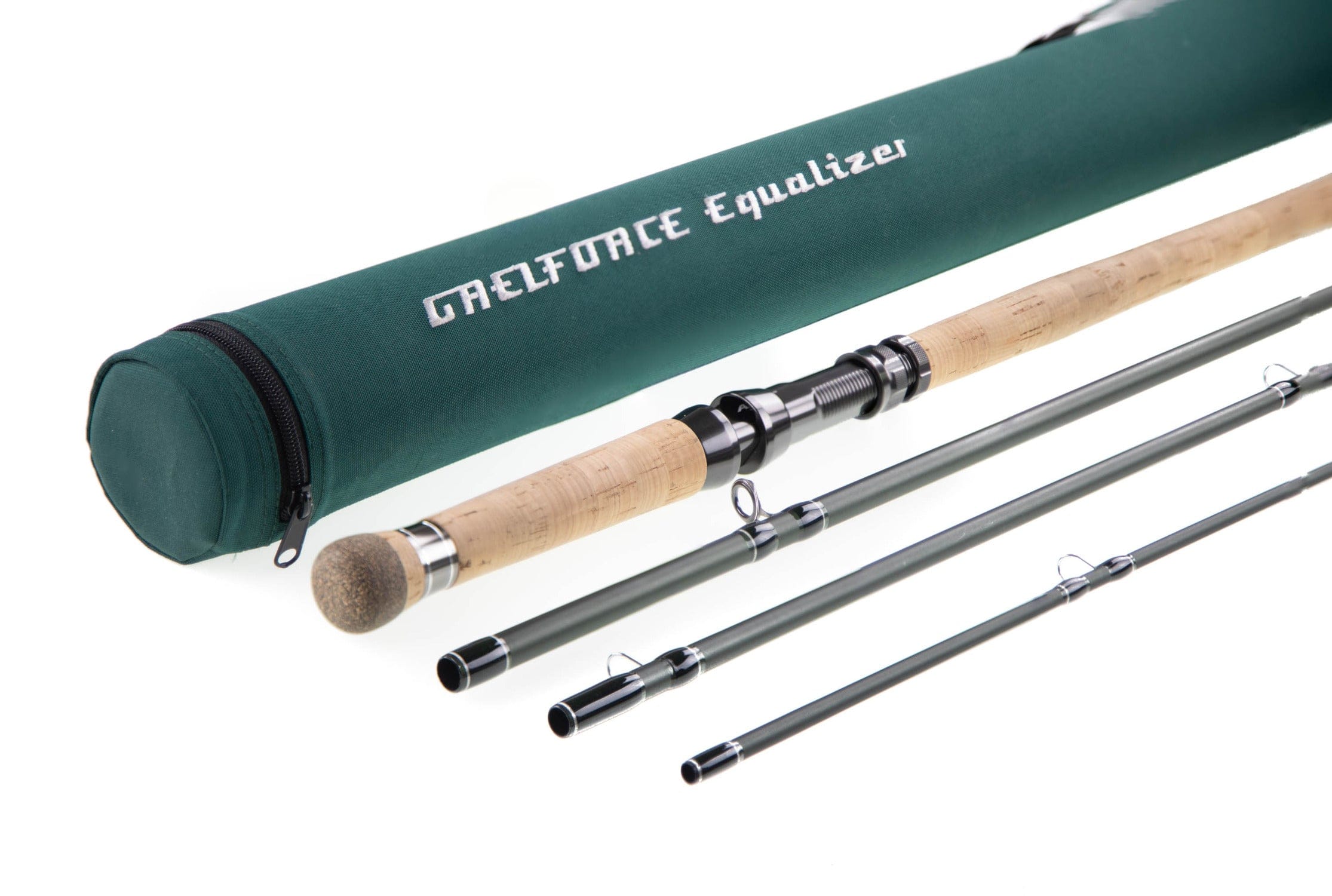


The new, innovative, user-friendly and highly efficient Gaelforce Equalizer 4pc rod range is capable of fishing either accurately at close range, or allowing easy use of its power reserves to fish effectively at greater distances. During the lengthy and critical process of testing this rod taper configured in various new carbon materials, whilst on the river in real fishing situations, my primary aim was developing an ergonomically efficient fly rod. I used my wide design and fishing experience to achieve this, paying particular attention to incorporate into the blank some very important design features that mixed lightness and strength,achieving a modern progressive action loading deeper into the butt section, while also having a fast recovery combined with a strong responsive tip section.The Gaelforce Equalizer 4pc rod range is capable of staying true to plane when under load and delivering a fly line in a straight line path without any unwanted side deflection. These rods will not disappoint, I am proud to put my name and lifetime of experience to the Gaelforce Equalizer 4pc fly rod range. A beautifully finished fly rod range which is capable of casting Spey lines, shooting heads and skagit lines with minimum effort.
Rod Action: Medium-Fast

Grip: Spey

Best For: Nymphs, Streamers, Big water

Experience Level: Advanced-Expert

| Length | Line Weight | Weight | Price | Buy |
|---|---|---|---|---|
| 11ft 3in | 7/8wt | - | $1,179.99 | |
| 13ft | 7/8wt | 9 oz. | $1,364.99 | |
| 13ft | 8/9wt | 9 oz. | $1,364.99 | |
| 14ft | 9/10wt | 10 oz. | $1,439.99 | |
| 14ft 6in | 9/10wt | 10 oz. | $1,514.99 | |
| 13ft 6in | 9wt | 9.75 oz. | $1,439.99 | |
| 12ft | 8/9wt | - | $1,319.99 |
Overall rating: 4.0 / 5 from 2 reviews.
Review topics: [].
"Very slow shipping. 3 days before shipping and a week and half before I got them. Ordered another rod and reel from another company and got it on two days."
"I am a relentless tackle tart, especially when it comes to fly lines. If a new line hits the market, I’m on it like a rat on cheese. I can’t help myself. It’s more expensive than a cocaine habit, but a lot better for me. So, when Gaelforce Fly Fishing brought to market their ESH Equalizer Shooting Head (11.2 to 12.4 metres/37 to 41 feet) and EES Equalizer Extended Spey shooting head (15 metres/49 feet) a few years ago, I bought one of every size from the company located in Kilsyth, Scotland. To say the lines were a revelation undersells my reaction when I cast them. The lines knocked my socks off. The ESH shooting head was the finest floating “Scandi” head that I had ever cast. It still is. The EES shooting head casts with the ease of a “Scandi” head but flies like a mid-belly line (especially when paired with 47-pound Varivas shooting line). For those who like to fish a hitched Sunray with precision at 120 feet, this is your line. If Gaelforce lines were that good, I wondered, how do their rods stack up? I took the plunge and ordered a four-piece Gaelforce Equalizer 15-foot 10-weight (GE 1510). I paid full retail for the rod—something I’d not done in thirty years. For good measure, I added the Gaelforce Equalizer 63-foot #10/11 integrated spey line. I wadered up and hit my local casting venue to test the new rod and line. Uncasing the new Gaelforce rod revealed a lower grip that is substantially longer than the grip I’m used to on a typical American rod. Accented with an aluminum ring, the lower grip is long enough to allow the caster to use a thumb-on-top grip with the bottom hand. If you use this grip on an American rod, your thumb ends up on the reel seat. The lower grip on the Gaelforce 1510 completely eliminates this problem. A thumbs-on-top grip with both hands is significantly more powerful than the “O.K.” grip—formed by making the “O.K.” sign with your fingers—that is used by virtually all American casters. If you use a thumb-on-top grip with the lower hand, it allows you to exert significantly more power with the lower hand at the “business end” of a double-handed rod. As a bonus, the thumb-on-top grip with the top hand on the upper grip acts as a “block” to prevent the caster from “blowing through” the rear stop on the back cast. Moving up the rod, the bombproof ALPS reel seat is triangular in shape, which prevents the reel, particularly a heavy reel, from rotating in place while casting. The hood of the reel seat locks the reel securely in place with absolutely no wiggle. A reel that moves in its reel seat drives me absolutely crazy over a long fishing session. Top marks to the ALPS reel seat. Best on the market by a long shot. The cork on the upper grip of the rod is thinner by design than the competing grip of an American rod. The thinner grip allows the caster to relax the fingers of the top hand when using a thumb-on-top grip, which, in turn, allows the caster to deemphasize the top hand when making the forward stroke. The rod features an elegant matte finish in a color that I would describe as Forest Green. There is no flash transmitted from the matte finish of the rod that might alert a salmon to your presence. The rod features top-shelf Fuji stripping guides as well as alignment dots for quick and easy assembly. The length of the top grip on the Gaelforce 1510 is shorter than you might expect on a rod designed in Scotland. There’s a reason for this design. Place the thumb of your top hand at the very top of the upper grip and then put your lower hand at the bottom of the lower grip using the thumb-on-top grip. Your hands are now properly spaced from maximum ergonomic efficiency. If the thumb of your top hand rests on the graphite shaft above the cork grip, your hands are too far apart. Not that they are listening, but American rod manufacturers build the vast majority of their two-handed offerings with relatively stiff butts and soft tips. When making a single spey, the soft tip has a tendency to unload too early—premature…well, you get the idea—making it difficult to line up the back cast with the forward cast when executing a single spey. The Gaelforce 1510 has the opposite tendency. The robust tip and softer (by comparison) mid- and butt sections allow the caster to load the rod deep into the cork handle. The rod has a semi-regressive feel although the overall bend profile of the rod remains progressive. The upshot of this authoritative “through” action is the caster feels like he has all day long to turn the corner when making a single spey. Easy is good. Especially in spey casting. This feature is particularly noticeable when casting the Gaelforce 1510 in combination with the Gaelforce 63-foot spey line. Once I dialed in the stroke with a few jump-roll casts, I could turn the corner when making angle changes of 70 degrees with consummate ease. These angle changes were so easy, in fact, that the first thing I did was measure the head to make sure it was 63 feet long. Yup. Sixty-three feet. Snake rolls were similarly straightforward. The deep bend into the cork slowed down the aerial portion of the cast, allowing me to place my anchor with precision. The Gaelforce 1510 also made short work of the ESH (11.2 to 12.4 metres/37 to 41 feet) and EES (15 metres/49 feet) shooting heads. The same control that the rod demonstrated with the 63-foot head translates to these shorter heads. I used to think you needed a rod designed for Scandi-style casting to cast a Scandi-style line. Wrong. The principles of spey casting are the same, whether you’re casting a Scandi-style shooting head, a Skagit head or a long line. A good rod is a good rod. End of story. I am particularly impressed with the performance of the Gaelforce 1510 when playing strong salmon. I’ve landed salmon up to 13 kilos (28 pounds) on the Cascapedia using the rod. There are absolutely no flat spots in the rod, no weak tip that folds on you just as you are about to land your largest salmon of the season. Some rods cast well, but don’t adapt to the rigours of fighting and landing three- and four-sea-winter salmon in a stiff current. The Gaelforce 1510 allows you to “put the wood” to a fish. It’s what my English-speaking friends across the pond would call a “proper salmon rod.” James Chalmers, the architect and the brains behind Gaelforce Fly Fishing, also runs Team Gaelforce, which includes such casting luminaries as multiple world champions Gerard Downey (Ireland), Travis Johnson (U.S.A.) and Martin Kiely (Ireland). The designs of Gaelforce rods and lines are informed by the relentless pursuit of casting precision on the concrete ponds of Golden Gate Casting Club in San Francisco, CA and at “the quarry” located near Kilsyth, Scotland, which, as far as I can tell, is the Area 51 described on the Gaelforce website. The result of this constant testing by some of the world’s top speycasters and, of equal importance, by hardcore salmon fishers is arguably the strongest line-up of double-handed rods on the planet at this time. Let’s be clear. The Gaelforce Equalizer 1510 is not a tournament rod. It’s a fishing rod. I don’t sing the praises of the rod on the river. I simply hand it over to anyone who asks about the rod. “Give it a try,” I say. The response after a short test is always, “Holy ****!” Insert your expletive of choice in the previous sentence and you’ll know what these folks are talking about."